
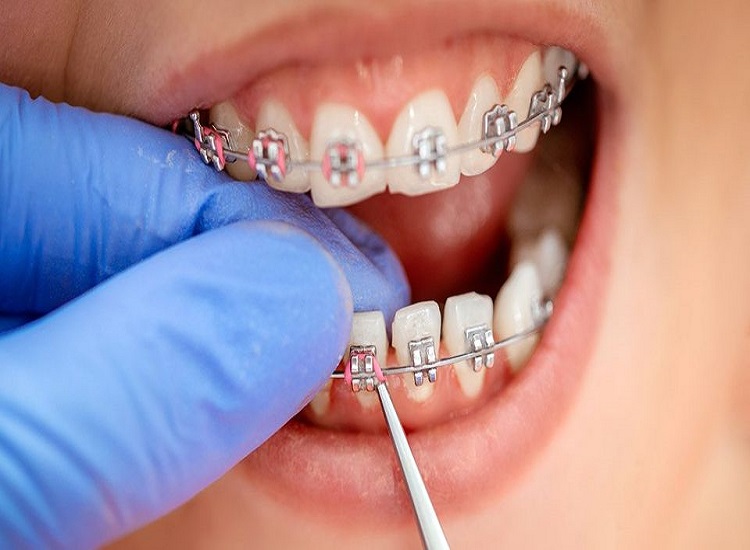
What orthodontists look for during your first visit.
We recently met with an architect and contractor to discuss some changes we would like to make to the office. They started talking to each other about the header, beam size, and support loads while our eyes started to glaze over. This got us thinking about how we may sound during our first visit with our patients. We throw around words that as an orthodontist we are quite used to using but now realize that our patients and parents may just hear “blah blah crowded teeth blah blah.” The following are about 5 things that we, orthodontists, look at during your first visit to see us.
1) Count the teeth….count the teeth….count the teeth
We had a professor during our orthodontic residency that always emphasized that the first thing you should do is to “count the teeth.” You would be surprised by the number of patients that we have missing one or more teeth. The most likely teeth to be missing are the top lateral incisors (besides wisdom teeth) and its usually passed from one generation to another. It is important to evaluate the dental age of the patient including the number of baby teeth and if any are starting to get loose. There is no set age when a patient should start orthodontic treatment, however, the American Association of Orthodontics, recommends patients to be seen by an orthodontist by the age of 7. An informational pamphlet can be found here. It is quite rare that we start patients this early but some issues can be identified early and treated when it’s in the best interest of the patient.
In patients with a combination of baby teeth and permanent teeth, it’s important to evaluate their dental development. Sometimes patients are delayed in the eruption of their permanent teeth, for no particular reason. Also remember, on average girls mature physically earlier than boys of the same age. Other times, baby teeth are not falling out because the permanent teeth behind them are erupting into a poor position. An orthodontic x-ray, especially a 3D panorex, can help pinpoint the exact location of permanent teeth. Here is an example of a patient missing a lower bottom front tooth:
2) Overbite
This refers to how much the teeth overlap each other vertically. They are supposed to overlap about 10–20%. If they overlap more than that it’s called a deep bite. You can tell if you have a deep bite if you can’t see very much of your bottom teeth when you bite down. If the top teeth and the bottom teeth don’t overlap, it’s called an open bite. This usually happens if the patient has a history of habits such as thumb sucking or tongue thrusting. Here is an example of a deep overbite:
3) Overjet
This refers to how much the top teeth are stuck out in front or behind the bottom teeth when looking at the patient from the side. Ideally, the top teeth should touch the bottom, this is how teeth function the best. If the top teeth stick out too far from the bottom it’s called a protrusion. There are many causes when a patient has a protrusion, such as the teeth being pushed out too far or discrepancies in the patient’s skeletal growth. If the top teeth are inside the bottom teeth it’s called a reverse overjet or an anterior crossbite. This is one thing that is especially helpful to treat early. Here is an example of a protrusion and the finished result:
4) Crowding or Spacing of Teeth
Usually, this is the first thing that will cause the patient to seek out an orthodontist. Ideally, the teeth are supposed to be nicely aligned but this doesn’t happen too often. The amount of crowding and spacing varies from zero to a whole lot. If the crowding is severe it is helpful to start treatment before all the baby teeth fall out because there are things that orthodontists can do to create and preserve space before all the permanent teeth come in. If there is spacing with baby teeth present, we usually wait on treatment until more permanent teeth if all other factors are normal. Here is an example of crowded top teeth corrected with braces:
5) How the teeth fit together
We saved the best for last because it’s the most important. Teeth are supposed to fit together in a certain manner with the front teeth serving one purpose and the back teeth another. The top teeth are supposed to be on the outside of the bottom teeth. If any of the top teeth are on the inside, whether the front or back, is called a crossbite. Crossbites should be corrected before all the baby teeth fall out. Here is an example of how the back teeth do not fit together ideally. They should fit together like a zipper with top teeth locked in with the lower.
